›

Chipping Ball Position and Pitch Distance: Two Drills
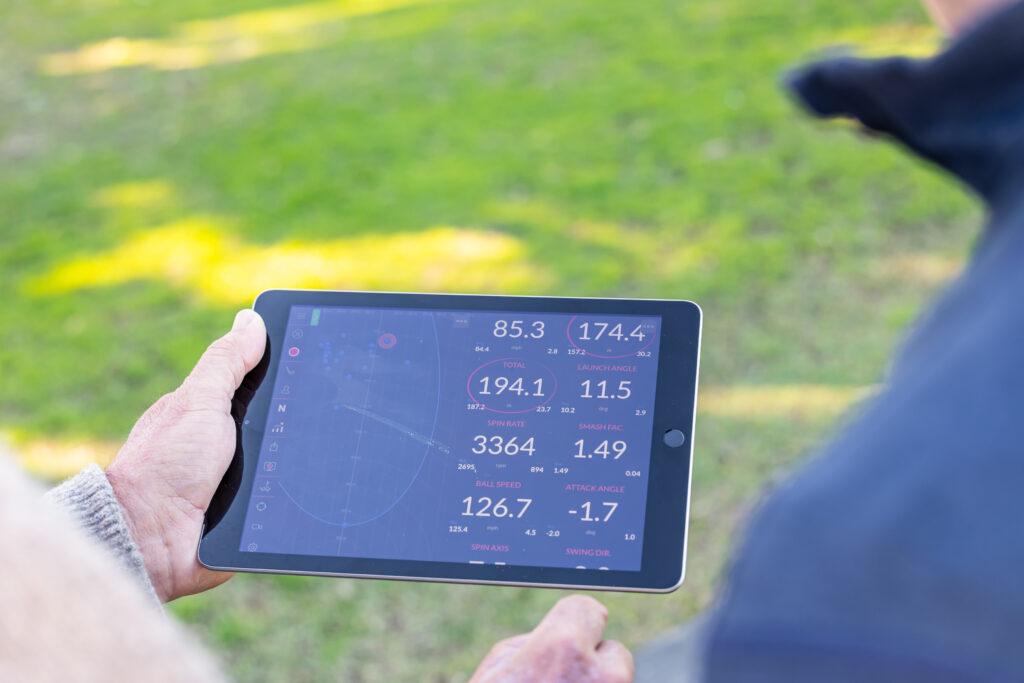
Swing data from a filmed swing on a tablet at the Australian Golf Schools coaching centre

Chipping Ball Position and Pitch Distance: Two Drills

Most golfers practise the driver and hope the short game looks after itself. It rarely does. The shots from 70 metres and in are where club golfers lose strokes they could easily keep, which is why short game coaching is part of every morning at golf school.

Here are two drills from David Gleeson, a former Australian Amateur champion and three time Asian Tour winner who now coaches at our Emerald Lakes Golf Club base. Both come from his coaching videos, and both are simple enough to take to your own practice green this week.

Drill one: find your chipping ball position

The question David hears most about chipping is where the ball should sit in your stance. His answer is to stop guessing and let the strike tell you.

How to set it up. Lay a row of balls on a slight angle across your stance. Walk into each one along the same line toward the target, so the first ball sits well back in your stance and the last sits almost where you would tee a driver.

How to hit them. Use the same basic motion and the same energy for every ball. The only thing changing is where the ball sits.

What you will see.

  • With the ball back in your stance, the clubface is a little closed and the ball comes out low. It flies a short way and runs a long way. This is the chip and run.
  • With the ball slightly behind the middle, you get what David calls the standard chip taught across the industry: a clean, clipped strike that comes off around the third groove.
  • With the ball forward of middle, the club can use its bounce. The ball flies higher and runs less.
  • With the ball almost in a driver position, you hit the ground just behind the ball and the ball floats up and stops quickly. This is the lob.

Why it works. Somewhere along that row you will find positions where the club meets the ground in a way you like, and positions where it does not. David is honest about his own: he likes the low running chip and the high lofted shot, and does not like the feel of the strike in the middle. The point is not to copy his preference. It is to find yours, so that on the course you choose a ball position you trust instead of one you read about.

Drill two: control pitch distance with sound

The medium length pitch, somewhere between 40 and 70 metres, is one of the most awkward shots in golf. It is not quite a chip and not quite a full wedge. Coaches have offered plenty of systems for it, from Dave Pelz’s clock method to simply feeling it. David uses a different reference: what the shot sounds like.

His rule is short. The sound equals the contact, and the contact equals the distance.

You can make exactly the same length of swing twice and get two very different results. Catch it heavy and the ball goes nowhere. Pinch it thin and it can race over the back of the green. The swing was the same. The contact was not.

How to practise it.

  1. Pick a target in your 40 to 70 metre range.
  2. Aim to strike the ball first, then take a little grass, so the ball and the ground are hit together through the centre of the clubface.
  3. Listen. A well struck pitch from a good lie has a solid, slightly heavy sound. That is the sound you are trying to repeat.
  4. Hit a run of balls with the same energy and match each sound to where the ball finishes.

Over time you build a library: this sound means this distance. On the course, you visualise the shot, recall the sound that goes with it, and swing to make that sound.

David also points out the trap with the modern, picked off pitch. Clipping the ball cleanly off the bottom grooves gives a lower, spinnier shot, and the margin between that and a thin one that flies the green is very small. Hitting ball and ground together through the sweet spot gives a more consistent strike, and a consistent strike is what gives you consistent distance.

One law that applies to both

In one of his videos, our founder and head coach Tom Linskey sets out a few simple laws that apply to every ball game. One of them matters most around the green: at the moment of contact, the club must be accelerating. In his words, “Even if it’s a six inch putt the putter should accelerate through the ball. If you stop at the ball quite often you miss.”

It is an easy fault to fall into around the green. A golfer makes a long backswing, sense they have too much, and slow down into the ball. The fix is the reverse: a shorter backswing and a committed, accelerating motion through to the target.

Where this fits at golf school

Every golf school includes short game coaching each morning, with an 18 hole playing lesson each afternoon so you use these shots under real course pressure rather than only on the practice green.

If the short game is where your scores leak, the three day short game school focuses on it almost entirely: chipping, pitching, bunker play and wedge play, with one of the three days dedicated almost wholly to putting and green reading. Like all our schools, it runs at no more than three students per coach. The three day short game school needs a minimum of two golfers to book, and single golfers can ask to join another group’s dates.

Same motion. Better contact. Fewer strokes.

See the short game schools or compare all our golf schools.

Enquire Today

If you would like more information
about our Golf School, enquire today.